The AMELH6030S-5R6MT delivers module-class performance metrics up front: up to 50 A rated capability with DCR as low as ~1.0 mΩ in a compact 6.8 × 6.6 × 3.1 mm footprint—key for high-density DC‑DC designs where efficiency and thermal headroom matter. This article's purpose is practical and test‑oriented: a walkthrough of the AMELH6030S-5R6MT datasheet and concrete validation steps engineers can apply to confirm Specs on the bench and in system-level layouts.
Evidence comes from the manufacturer’s product description and published Abracon AMELH6030S-5R6MT datasheet; the following sections translate published Specs into testable acceptance criteria, layout rules, and procurement guidance for US engineering teams building high-current synchronous buck converters and point‑of‑load regulators.
1 — Product Background & Key Applications (background introduction)
Form-factor & Series Overview
Point: The AMELH6030S family is a flat‑wire / hot‑pressed molded power inductor series optimized for high current density in a mid‑sized footprint. Evidence: the series is specified with a 6.8 × 6.6 × 3.1 mm package and flat‑wire construction intended for low DCR and improved thermal conduction. Explanation: flat‑wire winding and hot‑pressed molding reduce AC and DC resistance versus equivalent wound parts, improving efficiency in synchronous buck converters and enabling compact point‑of‑load implementations while meeting RoHS/Pb‑free lifecycle expectations. For clarity, reference the phrase Abracon AMELH6030S-5R6MT datasheet when sourcing mechanical and compliance details.
Primary Electrical Highlights
Point: Key Specs are 5.6 µH nominal inductance (MT tolerance), low series resistance, and high current capability. Evidence: typical data sheets for this family list inductance = 5.6 µH, tolerance code MT, DCR values down to ~1.0 mΩ, and rated currents (Irms/Isat) in the tens of amps (example: up to ~50 A rated in certain conditions). Explanation: low DCR reduces I²R losses and improves regulator efficiency; soft saturation behavior preserves inductance under DC bias compared with hard‑saturating ferrite cores, which is valuable for maintaining loop stability and predictable transient response in high‑current converters.
Target Applications & Design Trade-offs
Point: The part is targeted at high‑current DC‑DC converters, POLs, and demanding industrial/automotive systems. Evidence: typical use‑cases cited include synchronous buck stages stepping down 12 V to sub‑1.5 V rails at multi‑10 A currents, and point‑of‑load filters where thermal and efficiency constraints dominate. Explanation: trade‑offs include footprint versus current capability (larger parts or parallel inductors lower DCR further), and inductance retention versus DC bias—designers must balance needed inductance for ripple control against saturation under load; choosing this part favors current/efficiency over the absolute smallest profile.
2 — Datasheet Highlights: Electrical Specs & Thermal Limits (data analysis)
Electrical Parameters Breakdown
Point: Reading inductance, tolerance, DCR, and current ratings requires attention to test conditions. Evidence: datasheet values are typically quoted at specified test frequencies and excitation levels (e.g., inductance at 100 kHz, 0.1 V or similar), and DCR at 25 °C; saturation currents often reference a defined % drop in L0 (commonly 10–30%). Explanation: when validating Specs, reproduce the listed measurement conditions—use the same frequency and signal amplitude for L measurements, four‑wire (Kelvin) connections for DCR, and identical temperature baselines. Expect nominal DCR ~1–X mΩ and inductance tolerance per MT code; note long‑tail phrases like AMELH6030S-5R6MT DCR 1 mΩ when documenting expected ranges in test reports.
Thermal & Current Limits (Isat, Irms, Temp Rise)
Point: Isat and Irms define different limits: saturation threshold versus continuous thermal rating. Evidence: the datasheet differentiates Isat (current where inductance drops to a defined percentage of L0) and Irms (current producing a specified temperature rise under defined PCB mounting). Explanation: validate Isat with DC bias sweeps and define pass/fail as the current where L drops by the datasheet’s stated percentage (often 20–30% or a defined L0 fraction). For Irms, perform a load‑step thermal test on the target PCB to measure ΔT at steady state and compare to datasheet temp‑rise curves; remember that board copper, vias, and ambient will significantly affect measured temp‑rise, so interpret datasheet thermal limits as board‑dependent guidance rather than absolute guarantees.
Mechanical & Reliability Specs
Point: Proper land pattern and soldering profile are critical for electrical and mechanical reliability. Evidence: recommended footprint drawings, solder reflow curves, and lifecycle (RoHS/Pb‑free) notes appear in the datasheet. Explanation: follow the recommended land pattern and include sufficient copper pour and thermal vias under the pad to minimize temperature rise. Vibration and shock ratings (if provided) should inform mechanical retention strategies. For high‑current use, increase via count and copper cross‑section in the inductor return path; these layout details often determine whether the part meets the datasheet’s thermal performance in your system.
3 — Test Protocols & Bench Validation (method\/guides)
Recommended Bench Tests & Setup
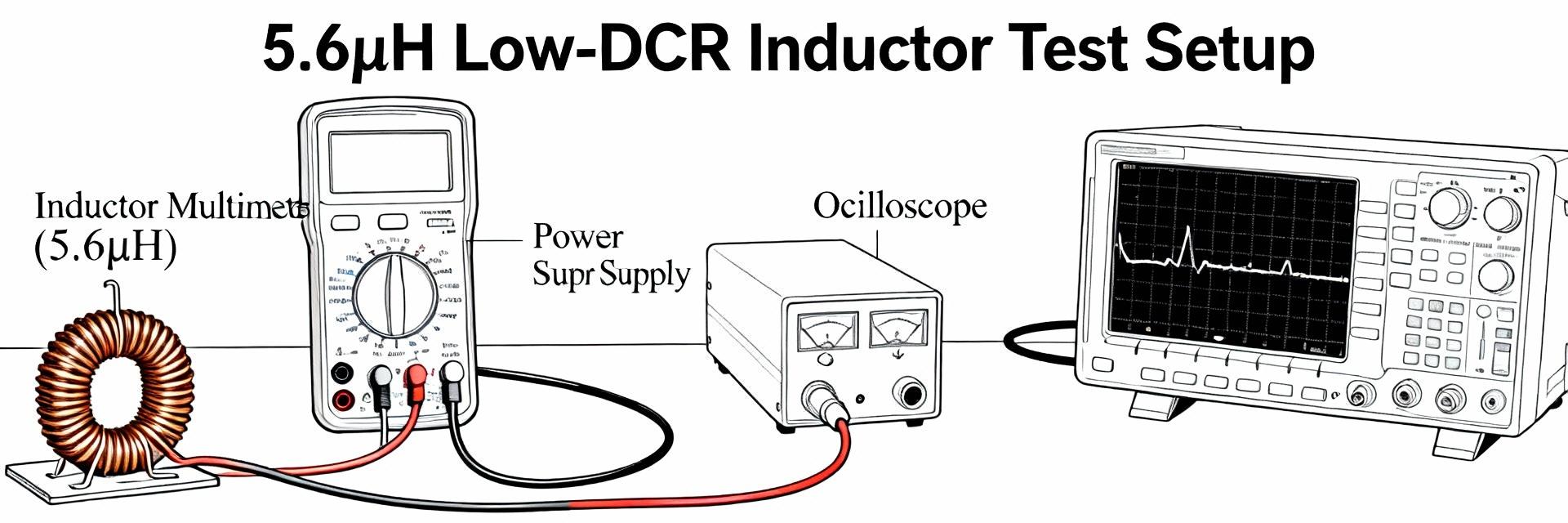
Point: A concise bench setup minimizes measurement error when validating Specs. Evidence: common instruments include precision LCR meter or impedance analyzer, micro‑ohm meter for four‑wire DCR, current‑regulated source for DC bias, and thermal camera for temp‑rise imaging. Explanation: use four‑wire Kelvin fixtures to measure DCR and avoid lead resistance; for L vs frequency use an impedance analyzer at the datasheet’s reference frequency and amplitude; perform DC bias sweeps with a low‑noise current source while monitoring L. Thermal tests should use board‑mounted samples and include steady‑state current hold with thermal imaging focused on the inductor body and adjacent copper.
Sample Test Procedures & Expected Results
Point: Step‑by‑step procedures make pass/fail criteria objective. Evidence: a practical sequence: (1) DCR (4‑wire) at 25 °C; (2) L vs DC bias sweep to Isat; (3) Isat determination (e.g., current where L ≤ 70–80% L0 depending on datasheet definition); (4) thermal run to measure ΔT at rated Irms. Explanation: expect DCR roughly in the datasheet’s low‑mΩ range (document measured value ±%); L drop under high DC bias will show soft saturation—quantify the L@Idc curve and compare to datasheet curves. For temperature rise tests, declare pass when ΔT ≤ datasheet specified temp‑rise at the tested Irms and board conditions or when operating margin is acceptable for the system’s thermal budget.
Interpreting Anomalies & Failure Modes
Point: Typical anomalies point to measurement or layout issues rather than part defects. Evidence: common failures include elevated DCR from poor Kelvin connections, higher ΔT from insufficient PCB copper or missing thermal vias, and apparent early saturation due to incorrect L measurement conditions. Explanation: corrective actions include re‑checking four‑wire contact quality, increasing copper area and via count, ensuring the LCR meter excitation matches datasheet conditions, and retesting with tightened fixtures. Maintain a re‑test checklist: verify instrument calibration, confirm ambient temperature, and run at least three samples to check lot variation.
4 — Comparative Analysis & Design Alternatives (case study)
Side-by-Side: AMELH6030S-5R6MT vs Comparable Parts
Point: A small comparison highlights where this part wins and where alternatives are preferable. Evidence: comparison criteria should include inductance, DCR, Isat/Irms, footprint, and cost/availability. Explanation: use the table below to contrast the AMELH6030S-5R6MT with two representative alternatives (other AMELH6030S variants or competing series) and pick based on prioritized constraints in the design brief.
| Part | Inductance | DCR (typ) | Isat / Irms | Footprint (mm) |
|---|---|---|---|---|
| AMELH6030S-5R6MT | 5.6 µH | ~1.0–X mΩ | Up to ~50 A (datasheet conditions) | 6.8 × 6.6 × 3.1 |
| AMELH6030S-R36MT | 3.6 µH | slightly lower DCR | Comparable Isat | 6.8 × 6.6 × 3.1 |
| Competitor‑A (alt series) | 5.6 µH | higher DCR | Lower Isat | Similar or larger |
When to Choose AMELH6030S-5R6MT vs Alternatives
Point: Decision logic depends on current vs. profile priorities. Evidence: choose AMELH6030S-5R6MT when the design demands the highest continuous current with minimal DCR in the stated footprint—for example, a 12 V → 1.2 V, 30 A buck converter where efficiency and PCB copper area are constrained. Explanation: if a lower profile or different inductance (for different ripple specs) is required, pick a variant (R36, R38, etc.) or alternate family that trades current for height/profile. Document the decision flow: prioritize DCR and Isat first for efficiency‑critical rails, then footprint and height for space‑constrained boards.
Sourcing, Lead Times & Cost Considerations
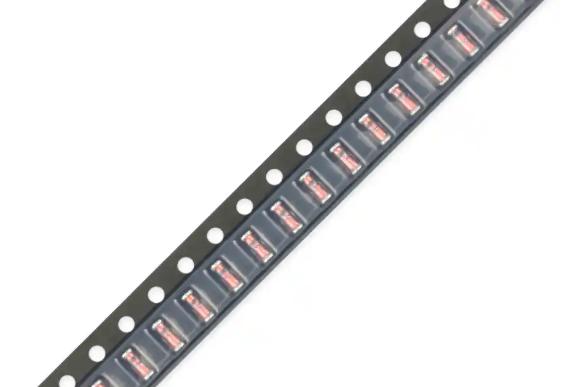
Point: Procurement planning avoids late surprises. Evidence: typical distribution channels include major authorized distributors; part‑number variants (e.g., R36, R56) reflect inductance or tolerance differences and can affect lead times and price. Explanation: order evaluation samples early, confirm tape & reel packaging for automated assembly, and check lot‑to‑lot DCR variation. If lead times are long, evaluate approved alternates and build supplier dual‑sourcing into purchase orders to mitigate schedule risk.
5 — Practical Design & Test Checklist for Engineers (action recommendations)
Pre-Layout Checklist
Point: Layout decisions determine whether datasheet thermal targets are met. Evidence: recommended items: use the datasheet land pattern, maximize top/bottom copper under and adjacent to the inductor, add 4–8 thermal vias to inner planes, and place the inductor close to switching FETs to minimize loop area. Explanation: as a rule of thumb, increase copper area on the inductor pads and include multiple thermal vias (drilled and filled when available) to the internal planes. This reduces ΔT at rated current and lowers effective DCR by improving heat sinking.
Pre-Production Validation Checklist
Point: Sign‑off requires both electrical and environmental verification. Evidence: required tests include four‑wire DCR, L vs DC bias, Isat definition, steady‑state thermal rise on the populated board, and applicable environmental tests (thermal cycling if specified). Explanation: establish pass/fail thresholds: measured DCR within ±X% of datasheet (define X per quality plan), L retention under DC bias within acceptable margin for regulator stability, and temperature rise below the system’s permitted ΔT. Include test logs and sample sizes in the validation report.
Field and Manufacturing Recommendations
Point: Manufacturing controls and field checks maintain in‑service reliability. Evidence: assembly notes from the datasheet cover reflow profile and handling; recommended production checks: AOI/X‑ray for solder fillet integrity and periodic sample thermal tests. Explanation: store and handle reels per supplier guidance to avoid moisture or mechanical damage; implement in‑circuit checks where possible and schedule periodic characterization runs to detect lot drift. For high‑reliability programs, include incoming inspection of DCR for every lot.
Summary
The AMELH6030S-5R6MT stands out for its combination of 5.6 µH nominal inductance, up to ~50 A capability, and DCR down to ~1.0 mΩ in a 6.8 × 6.6 × 3.1 mm package. Validating key Datasheet claims requires reproducing measurement conditions: four‑wire DCR at 25 °C, L vs DC bias sweeps to define Isat, and board‑mounted thermal runs to quantify ΔT at Irms. Next step for engineers: run the recommended L vs DC bias and temp‑rise tests on the actual PCB to confirm that the part meets system thermal and efficiency targets before committing to production.
Key Summary
- AMELH6030S-5R6MT offers 5.6 µH with very low DCR (~1.0 mΩ), prioritizing efficiency for high‑current POL and buck converter applications.
- Validate Specs by reproducing datasheet test conditions: 4‑wire DCR, L at reference frequency, and DC bias sweep to identify Isat behavior.
- Thermal performance is board‑dependent—use generous copper, thermal vias, and steady‑state thermal imaging to confirm Irms temp‑rise on the target PCB.
- Procure samples early, check packaging and lot DCR variability, and plan alternates if lead times or cost pressures arise.
Frequently Asked Questions
How do I measure AMELH6030S-5R6MT DCR accurately?
Use a calibrated four‑wire (Kelvin) micro‑ohm meter with short, rigid connections to the inductor pads. Ensure the part is soldered or fixture‑mounted to eliminate contact variability. Measure at a controlled 25 °C ambient and average multiple readings across samples to characterize lot spread. Avoid two‑wire methods which include lead resistance and can overstate DCR; document the measurement setup and instruments in the validation record for traceability.
What is the best method to determine AMELH6030S-5R6MT Isat and L retention under DC bias?
Perform a DC current sweep while measuring inductance with an impedance analyzer that supports DC bias injection, or use a separate low‑noise current source and LCR meter. Define Isat per the datasheet’s L‑drop criterion (commonly the current where L ≤ specified % of L0). Plot L versus Idc to visualize soft saturation behavior and use the curve to set design margins—choose operating current below the point where inductance loss impairs ripple or loop stability.
How should I plan PCB copper and vias to meet AMELH6030S-5R6MT thermal Specs?
Maximize copper area on both top and inner planes adjacent to the inductor pads and include multiple thermal vias (four to eight or more depending on current) to internal planes. Use thicker copper (2–3 oz) where feasible and tie pads to large pours to spread heat. Validate with a steady‑state thermal run on the populated board and adjust via count/copper after measuring ΔT—datasheet thermal curves assume recommended PCB mounting, so your board layout is the primary variable in meeting published temp‑rise numbers.